Safe Patient Movement: When to Ask for Help
Approach safe patient movement for healthcare assistants by checking the plan, environment, equipment, ability and need for trained help before moving.
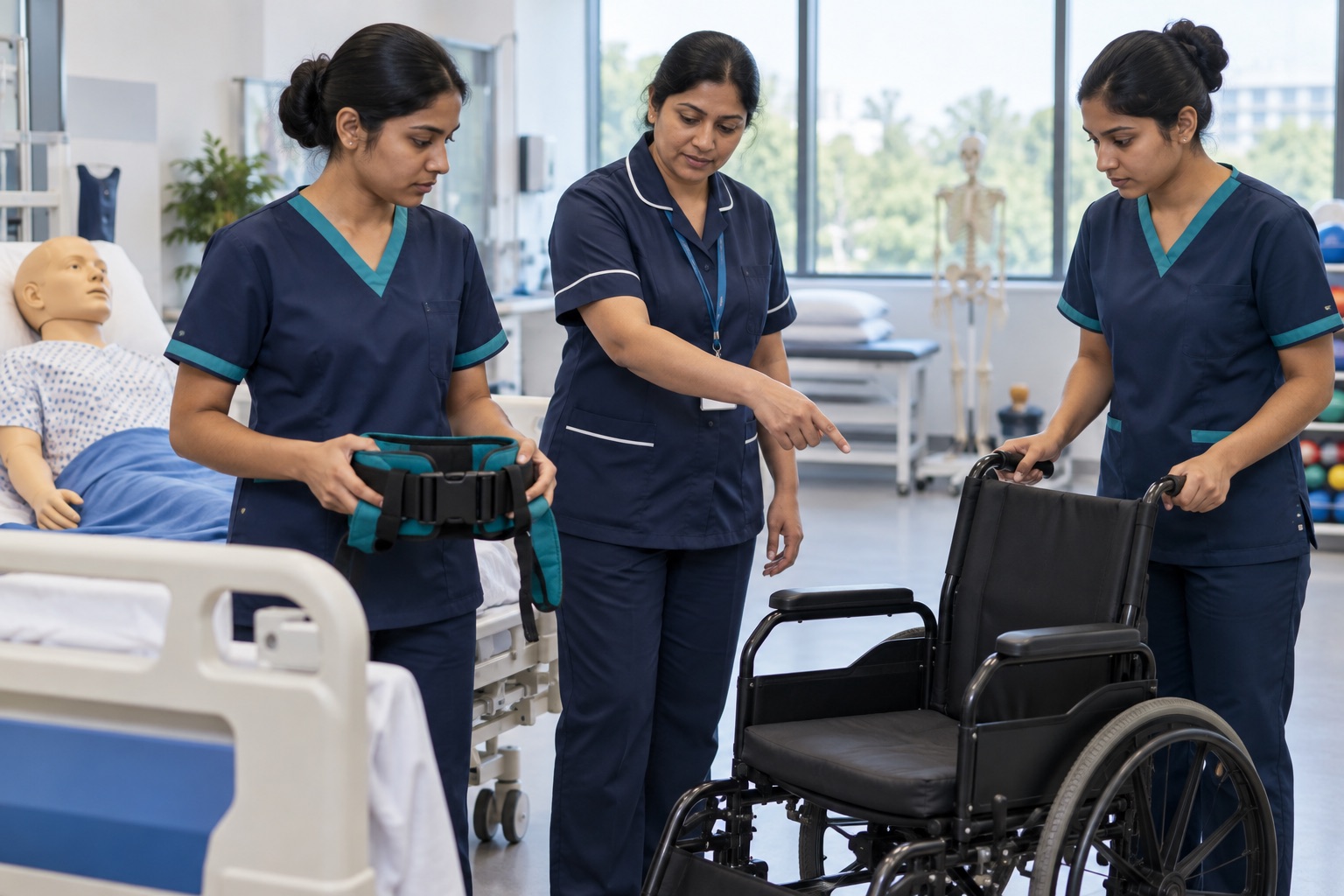
safe patient movement for healthcare assistants is a practical capability that can be learned through preparation, supervised practice and honest reflection. Movement support can place both the person and worker at risk when attempted without the right assessment, technique, equipment or assistance. Local training and care instructions always lead.
This guide is written for learners, freshers and working healthcare assistants in India. Exact duties and workplace processes vary, so always follow the written role description, local policy and instructions from the responsible qualified professional.
Why safe patient movement for healthcare assistants matters
Movement support can place both the person and worker at risk when attempted without the right assessment, technique, equipment or assistance. Local training and care instructions always lead.
Employers and supervisors usually look for consistent behaviour: reliability, respectful communication, attention to safety and willingness to ask when something is unclear. A responsible answer or action stays within the assistant’s training instead of trying to appear more clinically qualified.
A practical approach to safe patient movement for healthcare assistants
- Read the current movement instruction and ask the supervisor when the person’s ability or required equipment is unclear.
- Check the space, footwear, floor, brakes and route according to the method taught by the workplace.
- Explain the approved movement and encourage the person to participate only as their plan allows.
- Stop and seek trained assistance if conditions change, pain is reported, equipment is missing or you feel unable to continue safely.
Practise these steps in realistic scenarios rather than only reading them. Ask an instructor or supervisor to observe one specific behaviour, give feedback and check the corrected approach again. Small, repeatable improvements are more useful than a long checklist that is never applied.
What good practice looks like
Good practice is calm, factual and easy for another team member to understand. It protects privacy, keeps records accurate and moves concerns to the right person without unnecessary delay. When local instructions differ from classroom examples, pause and confirm the approved workplace method.
Keep a private learning note with the date, situation, feedback and next action, but never copy patient-identifying information into personal notes. Review progress weekly and choose one skill to strengthen during the next supervised shift or practice session.
Common mistakes to avoid
Do not improvise a lift, pull suddenly, use unapproved equipment, continue through pain, accept unsafe pressure or attempt a two-person method alone.
If an error happens, report it promptly through the workplace process. Hiding uncertainty or changing a record usually creates more risk than asking for timely help.
Use this guide before your next step
Turn the four actions above into a short personal checklist. Confirm any programme, OJT or job condition in writing, keep your documents organised and ask who will supervise the role. Preparation supports readiness, but selection and employment still depend on eligibility, vacancies, assessment, interview performance and the employer’s decision.
Explore healthcare opportunities and share your profile with Krinav.life.
Frequently asked questions.
What is safe patient movement for healthcare assistants?
Movement support can place both the person and worker at risk when attempted without the right assessment, technique, equipment or assistance. Local training and care instructions always lead.
What is the first practical step?
Read the current movement instruction and ask the supervisor when the person’s ability or required equipment is unclear.
How can a learner practise this skill?
Check the space, footwear, floor, brakes and route according to the method taught by the workplace.
Which mistakes should be avoided?
Do not improvise a lift, pull suddenly, use unapproved equipment, continue through pain, accept unsafe pressure or attempt a two-person method alone.